
Indian Marble: Timeless Beauty, Natural Character & Lasting Elegance
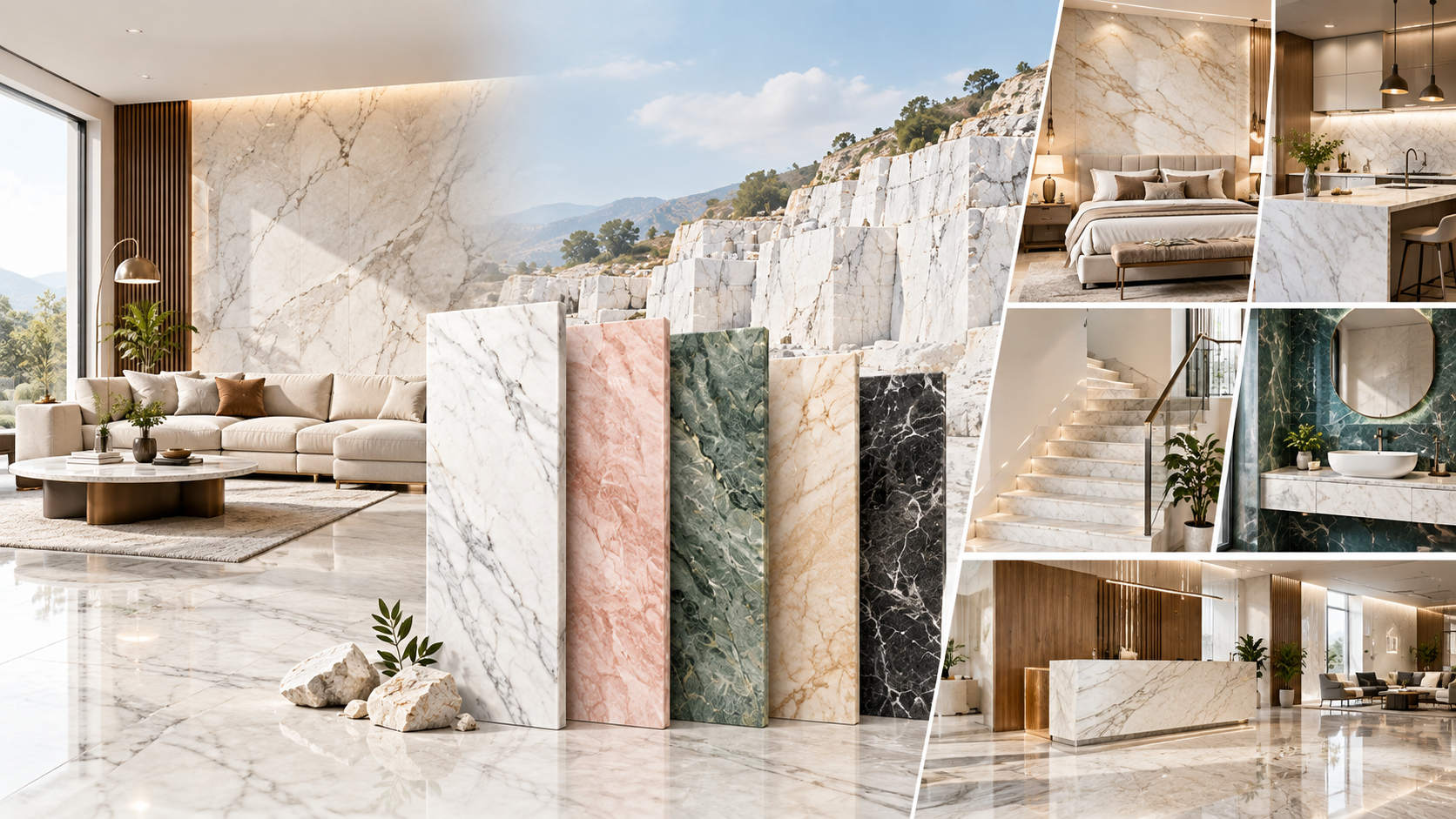
Indian marble is a natural stone known for its distinctive veining, rich colours, elegant appearance, and timeless appeal. Quarried from different regions of India, it is widely used for residential and commercial interiors, including floors, walls, staircases, countertops, vanity areas, and statement surfaces.
From classic white marble to elegant pink, green, and black varieties, Indian marble offers a wide range of natural patterns and colour variations. Every slab has its own character, making marble a popular choice for creating unique and sophisticated spaces.
Whether you are designing a luxurious living room, elegant bedroom, grand entrance, staircase, bathroom, or commercial space, Indian marble can add a natural and premium feel to the interior.
Key Features & Properties of Indian Marble
Indian marble combines natural beauty with versatility, making it suitable for a wide range of applications.
- Natural stone: Every slab has unique veining, patterns, and colour variations.
- Wide colour selection: Available in white, pink, green, black, beige, cream, and other natural shades.
- Distinctive patterns: Veins and mineral formations create a unique appearance in every piece.
- Multiple finishes: Common finishes include polished, honed, and leather finishes.
- Versatile applications: Suitable for floors, walls, staircases, countertops, vanity tops, and feature surfaces.
- Slab and tile formats: Available in different formats depending on the marble variety and supplier.
- Long-lasting material: With suitable installation, care, and maintenance, marble can retain its appearance for many years.
- Naturally cool surface: Marble can provide a naturally cool underfoot feel, which can be particularly comfortable in warm climates.
Indian Marble Sizes & Formats
Marble is available in different formats depending on the variety, supplier, slab dimensions, and intended application.
Common formats include:
| Format | Typical Application |
|---|---|
| Marble Slabs | Countertops, large floors, walls and feature surfaces |
| Marble Tiles | Flooring, walls and smaller areas |
| Cut-to-Size Pieces | Staircases, countertops, vanity tops and custom applications |
| Custom Fabricated Pieces | Special architectural and decorative requirements |
For large spaces, larger slabs can help reduce the number of joints and showcase the natural pattern more continuously.
Popular Indian Marble Varieties
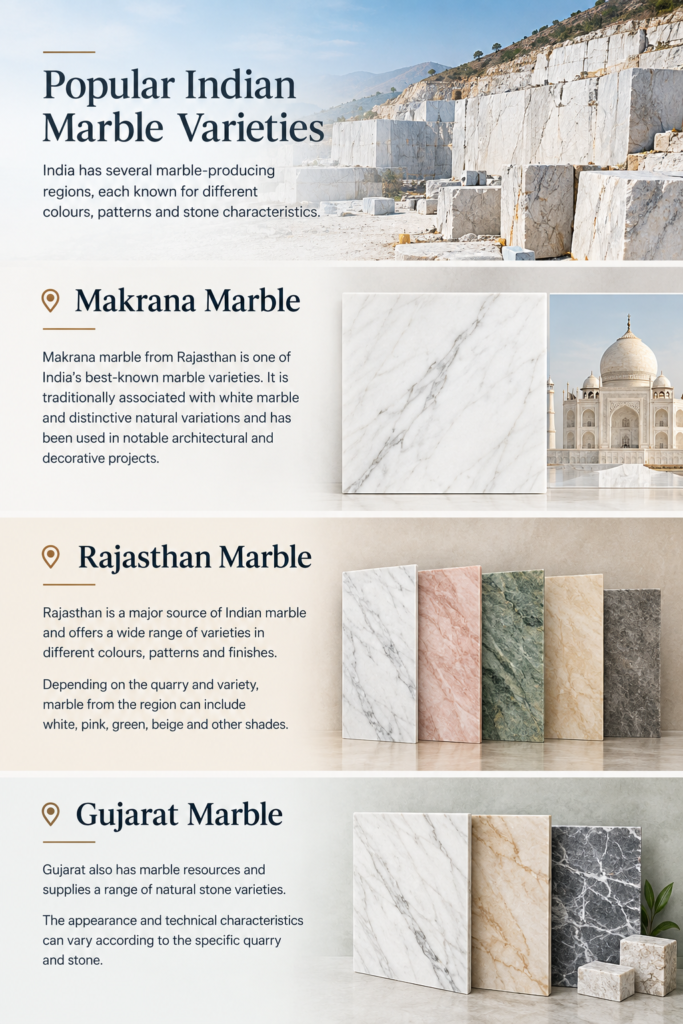
India has several marble-producing regions, each known for different colours, patterns, and stone characteristics.
Makrana Marble
Makrana marble from Rajasthan is one of India’s best-known marble varieties. It is traditionally associated with white marble and distinctive natural variations and has been used in notable architectural and decorative projects.
Rajasthan Marble
Rajasthan is a major source of Indian marble and offers a wide range of varieties in different colours, patterns, and finishes.
Depending on the quarry and variety, marble from the region can include white, pink, green, beige, and other shades.
Gujarat Marble
Gujarat also has marble resources and supplies a range of natural stone varieties. The appearance and technical characteristics can vary according to the specific quarry and stone.
Indian marble is natural stone quarried from different regions of India. It is available in a wide range of colours, patterns, and natural textures and is used for flooring, walls, countertops, staircases, and other architectural applications.
Indian marble is available in several natural shades, including white, pink, green, black, beige, cream, and other colour variations, depending on the quarry and marble variety.
Yes, suitable marble varieties can be used for residential and commercial flooring. The choice should consider the expected traffic, finish, maintenance requirements, and technical characteristics of the specific marble.
Selected marble can be used for bathroom walls, floors, vanity tops, and decorative surfaces. Because marble is porous and can be affected by certain chemicals, appropriate sealing, cleaning, and maintenance are important.
Consider the application, colour, veining, finish, slab size, maintenance requirements, budget, and overall interior design. It is advisable to inspect the actual slab or approved sample before making a final decision.
