
Italian Marble: Timeless Luxury, Elegance & Sophistication
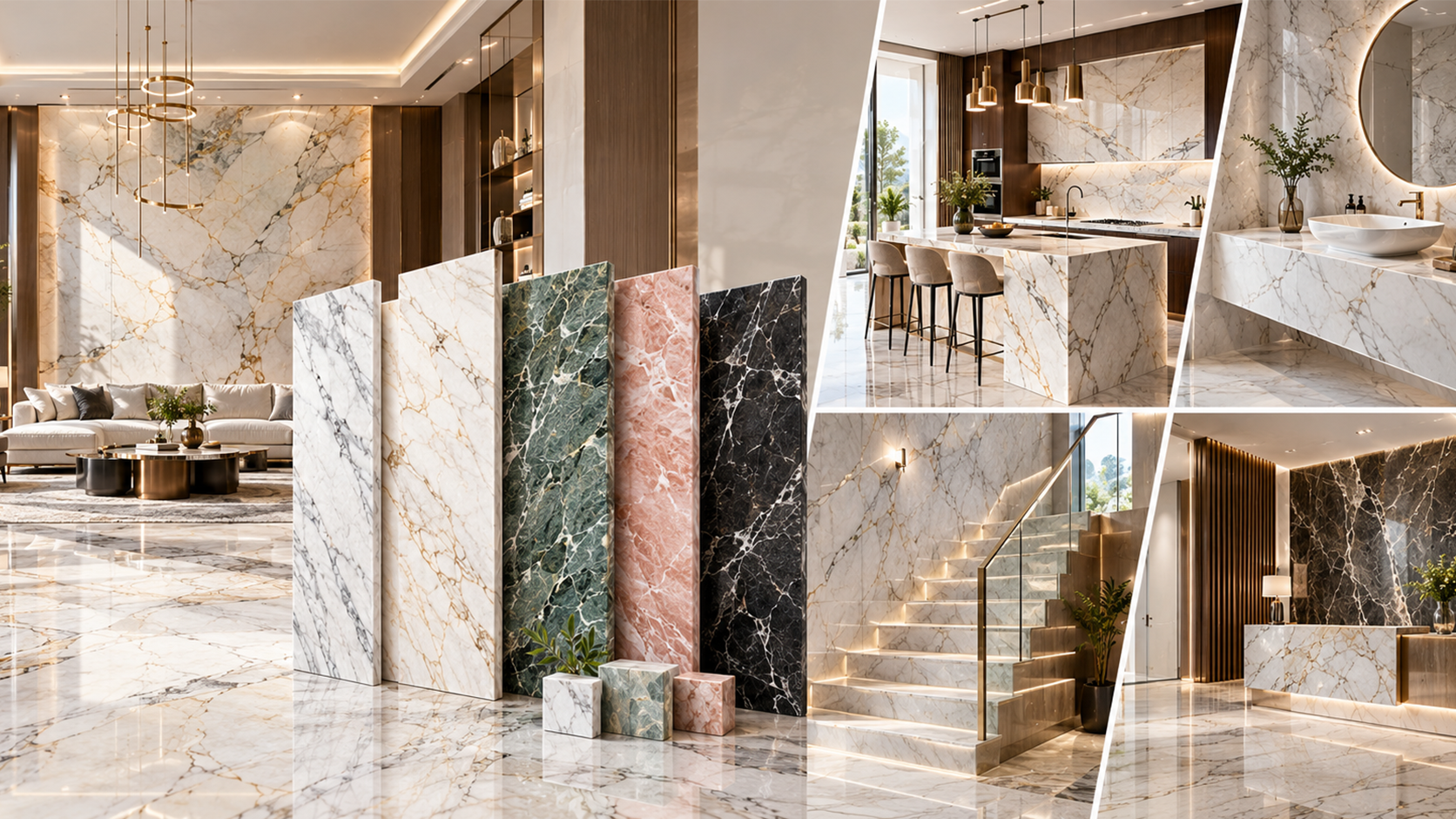
Italian marble is renowned worldwide for its exceptional beauty, refined veining, luminous appearance, and luxurious character. Quarried from various regions of Italy, it is a premium natural stone widely used in high-end residential, hospitality, and commercial interiors.
From the iconic Carrara and Statuario varieties to other distinctive Italian marbles, each stone offers its own combination of colour, veining, and natural character. Its sophisticated appearance makes it an ideal choice for creating statement floors, feature walls, countertops, staircases, and other architectural surfaces.
Whether used across an entire space or as a carefully selected feature, Italian marble can bring a timeless and premium aesthetic to both contemporary and classic interiors.
Key Features & Properties of Italian Marble
✔️ Imported Italian natural stone with distinctive colour and veining
✔️ Premium appearance with refined patterns and elegant finishes
✔️ Carrara, Statuario and other varieties available depending on selection
✔️ Bookmatched slab options for creating continuous and symmetrical vein patterns
✔️ Large slab formats suitable for expansive walls, floors and statement surfaces
✔️ Polished and other finishes available depending on the marble variety
✔️ Unique natural character — every slab can have variations in colour and veining
✔️ Suitable for flooring, walls, countertops, staircases and feature surfaces
Italian Marble Slab Sizes & Formats
Italian marble is generally available in large slabs as well as cut-to-size formats, depending on the variety and supplier.
Large slabs can be particularly useful for feature walls and expansive surfaces because they can reduce the number of visible joints and allow the natural veining to remain more continuous.
| Format | Common Applications |
|---|---|
| Large Slabs | Feature walls, floors, countertops and statement surfaces |
| Cut-to-Size | Staircases, countertops, vanity tops and custom applications |
| Tiles | Flooring, walls and selected interior applications |
Popular Applications of Italian Marble
Italian marble can be used across a variety of residential and commercial spaces.
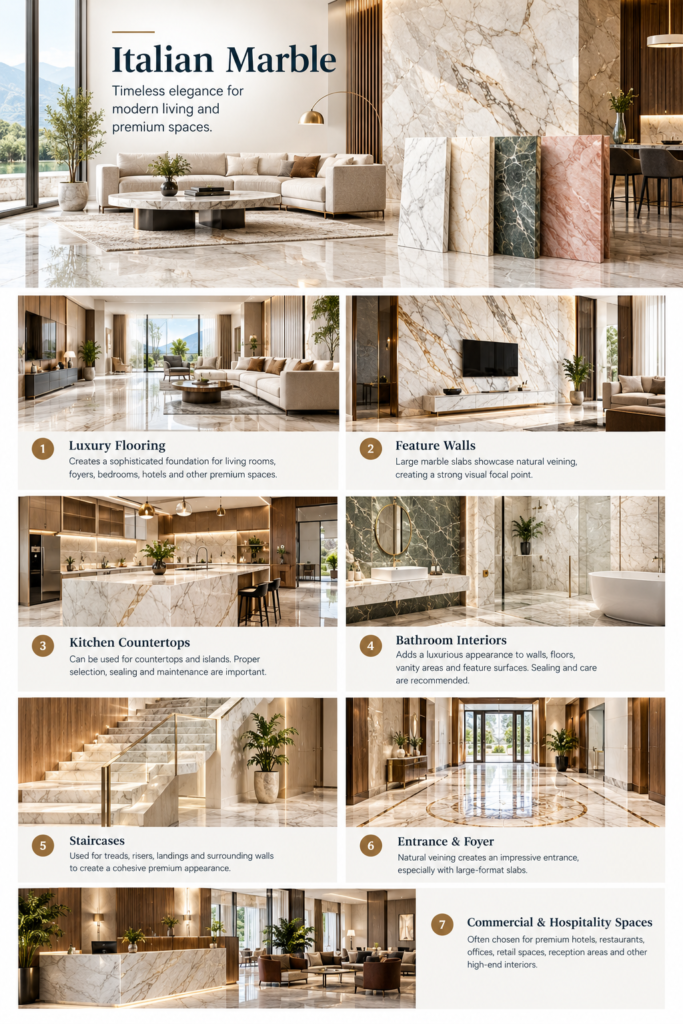
1. Luxury Flooring
Italian marble flooring can create a sophisticated foundation for living rooms, foyers, bedrooms, hotels, and other premium spaces.
2. Feature Walls
Large marble slabs can showcase natural veining across feature walls, creating a strong visual focal point.
3. Kitchen Countertops
Selected Italian marble varieties can be used for countertops and islands. However, marble can be sensitive to staining and acidic substances, so proper selection, sealing, and maintenance are important.
4. Bathroom Interiors
Italian marble can add a luxurious appearance to bathroom walls, floors, vanity areas, and feature surfaces. Appropriate sealing and care are recommended.
5. Staircases
Marble can be used for staircase treads, risers, landings, and surrounding walls to create a cohesive premium appearance.
6. Entrance & Foyer
The natural veining of Italian marble can create an impressive entrance or foyer, particularly when large-format slabs are used.
7. Commercial & Hospitality Spaces
Italian marble is often considered for premium hotels, restaurants, offices, retail spaces, reception areas, and other high-end interiors.
Italian marble is natural stone quarried in Italy and is known for its distinctive colours, veining, and refined appearance. Popular varieties include Carrara, Statuario, and Calacatta.
Carrara marble generally has a lighter background with softer grey veining, while Statuario is typically recognised for a lighter background with more pronounced and dramatic veining. The exact appearance varies between individual slabs and varieties.
Yes, suitable Italian marble varieties can be used for interior flooring. Selection should consider the expected traffic, finish, maintenance requirements, and technical characteristics of the specific stone.
Yes. Variations in colour, veining, movement, and mineral patterns are natural characteristics of marble. These variations contribute to the uniqueness of each slab.
Consider the marble variety, colour, veining, slab size, finish, application, maintenance requirements, and budget. Inspecting the actual slab is recommended before final selection.
