
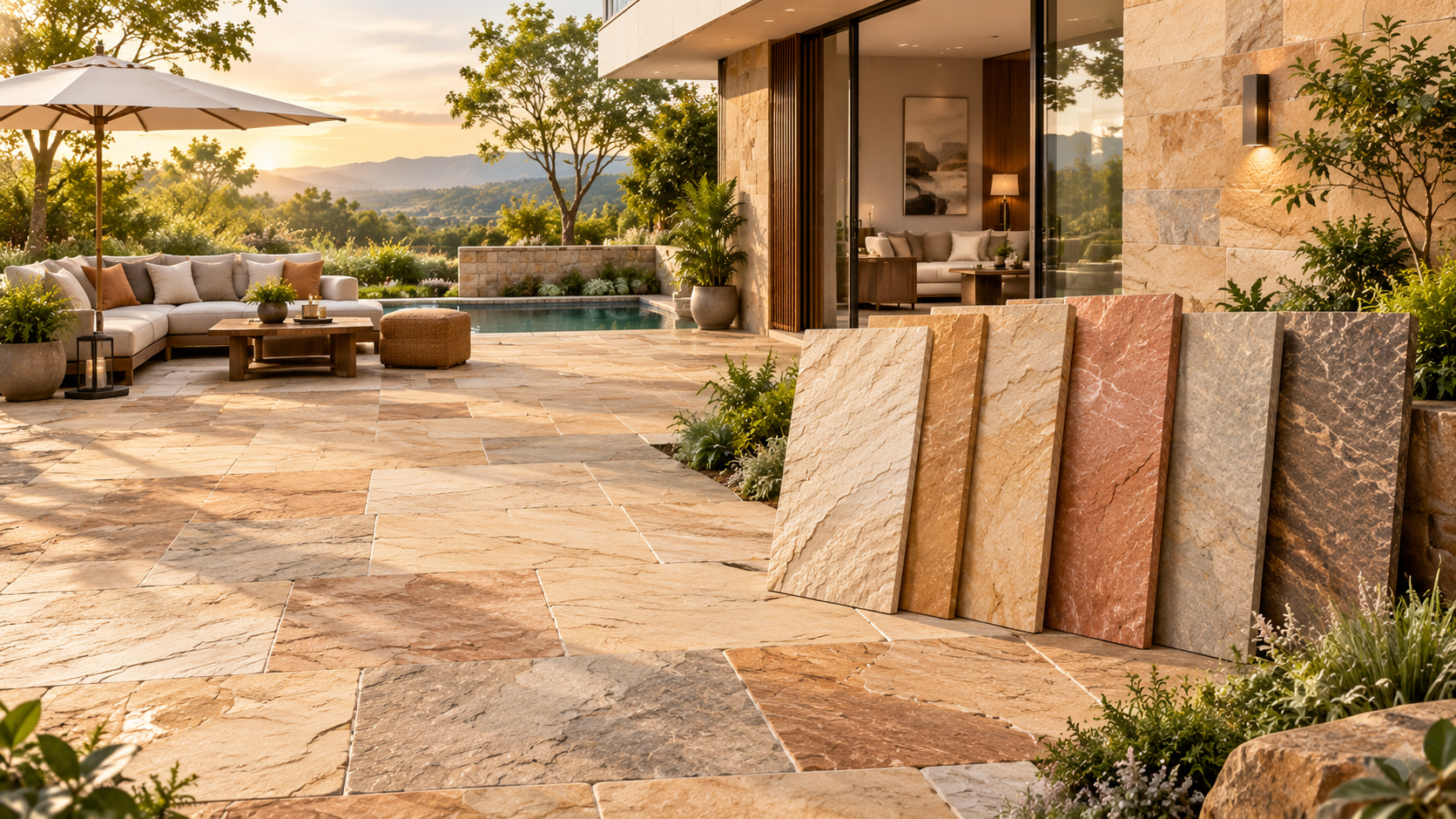
Sandstone: Natural Warmth, Texture & Timeless Character
Sandstone is a natural stone valued for its warm earthy colours, distinctive textures, and versatile appearance. Its natural character makes it a popular choice for both interior and exterior applications, from outdoor paving and pathways to feature walls, landscaping, and architectural surfaces.
Available in shades ranging from beige, cream, yellow, brown, and reddish tones, sandstone can complement contemporary, rustic, traditional, and natural design styles. Its textured appearance adds depth and character while helping create a seamless connection between built spaces and their surroundings.
Key Features & Properties
✔️ Natural earthy colours with unique variations
✔️ Available in riven, honed, and other finishes
✔️ Ideal for outdoor paving, pathways, patios, and landscaping
✔️ Suitable for feature walls and decorative cladding
✔️ Naturally textured appearance for a warm, organic look
✔️ Suitable for selected interior and exterior applications
✔️ Can complement wood, stone, concrete, and natural landscaping
✔️ Available in tiles, slabs, paving stones, and cut-to-size formats
How to Choose the Right Sandstone
Consider the following factors before selecting sandstone:
- Application: Choose the stone according to whether it will be used indoors, outdoors, for paving, cladding, or landscaping.
- Finish: Select a riven, honed, or other finish based on the desired appearance and intended use.
- Colour: Match the sandstone with the building façade, flooring, landscaping, furniture, and surrounding materials.
- Texture: Consider how the surface texture will affect appearance, cleaning, and everyday use.
- Thickness: Select an appropriate thickness based on the application and expected load.
- Surface suitability: For outdoor and wet areas, check the manufacturer’s recommendations for slip resistance and water exposure.
- Natural variation: Expect variations in colour, texture, and pattern because sandstone is a natural material.
- Maintenance: Consider cleaning and sealing requirements before installation.
Advantages of Sandstone
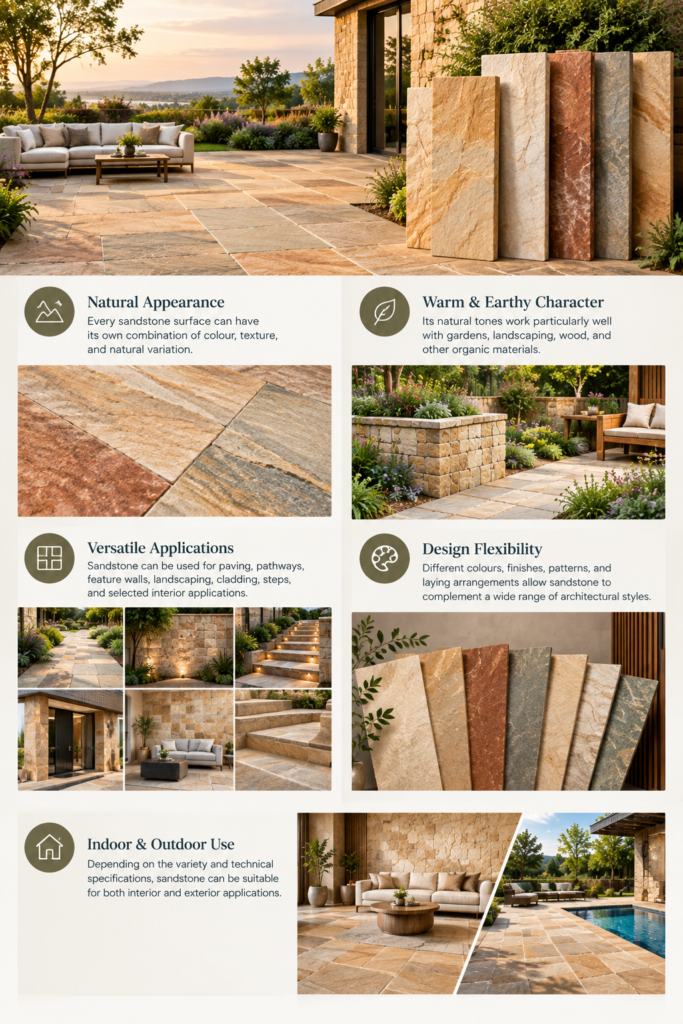
Natural Appearance
Every sandstone surface can have its own combination of colour, texture, and natural variation.
Warm & Earthy Character
Its natural tones work particularly well with gardens, landscaping, wood, and other organic materials.
Versatile Applications
Sandstone can be used for paving, pathways, feature walls, landscaping, cladding, steps, and selected interior applications.
Design Flexibility
Different colours, finishes, patterns, and laying arrangements allow sandstone to complement a wide range of architectural styles.
Indoor & Outdoor Use
Depending on the variety and technical specifications, sandstone can be suitable for both interior and exterior applications.
Sandstone is a natural stone formed from compacted sedimentary material. It is known for its earthy colours, natural texture, and variations in appearance.
Sandstone can be used for outdoor paving, patios, pathways, landscaping, feature walls, boundary walls, steps, and selected interior applications, depending on the product specifications.
Sandstone is available in natural shades such as beige, cream, yellow, brown, and red, with variations depending on its source and composition.
Yes. Variations in colour, texture, grain, and pattern are natural characteristics of sandstone. These variations contribute to its distinctive appearance.
Yes, suitable sandstone products can be used for interior and exterior wall applications, including feature walls, façade elements, and boundary walls. The product’s recommended application and installation requirements should always be checked.
